


This is an easy enough walk through a large green space, but with each step, there’s a story that you might otherwise miss.
This park at the heart of Forres IS the heart of the town and equally demonstrates the heart of a local boy who moved away, made his fortune and came back to endow it to the people who live in and love Forres.
Today it is a proud public space, home to annual events such as Theme Day in May, the Highland Games in July and a bonfire and fireworks display in November. And it’s regularly used for other large events.
Bakery boy
Named Grant Park after Alexander Grant, a baker’s apprentice who went on to put one of the world’s most renowned biscuits on the map, then returned home decades down the line and gifted the park to the people of Forres.
Born in Bridge Street 1864, Alexander Grant was educated at Forres Academy and had a stint in a legal office before concluding it was not his vocation. He made for a baker’s in town instead. By 1888 he was in Edinburgh as an assistant in the basement of Robert McVitie’s Queensferry Street bakery. Four years later, at barely twenty, he had the recipe for what would become the McVitie’s digestive; it was to be found in biscuit tins and on tea tables across the globe. To this day, it’s one of those recipes that remains a well-kept secret.
Grant worked his way up to foreman and manager, and when McVitie died in 1910, he took a controlling stake in the company.
He turned it into an international concern and made his fortune; upon his death in 1937 his estate was worth in excess of a million pounds, no small thing for the time.
But he did not lose sight of his origins. Grant was a philanthropist of the first order, parting with some £750,000 over the years, usually without fanfare. His money was used for stained glass windows in Forres Parish Church (St Laurence), he gave the National Library of Scotland £200,000, and provided public baths in Nairn and a motorised fire engine for the town. In 1924 he was made a baronet and a Freeman of Forres, to be known as Sir Alexander Grant of Forres.
The same year, he also bought the Logie Estate, where generations of his family have lived, and still do to this day.
Park life
Also in the same year he put down £5,000 for the council to buy Forres House and an extra £1000 to lay the grounds out for whatever recreational use they liked, no conditions. You could call it a present to the town he always considered home.
A hundred years have come and gone and it serves its purpose as well as ever. On the northern side you will find the traditional and sunken floral gardens, the latter constructed where Forres House once stood before the fire of 1970.
They are in fine order, thanks to the volunteers at Forres in Bloom. The team behind the town’s many honours in the Scotland and Britain in Bloom contests are to be credited for that, not least their Queen’s Award for Voluntary Service. Make it a summer visit and you will find the floral sculptures alone justify the trip.
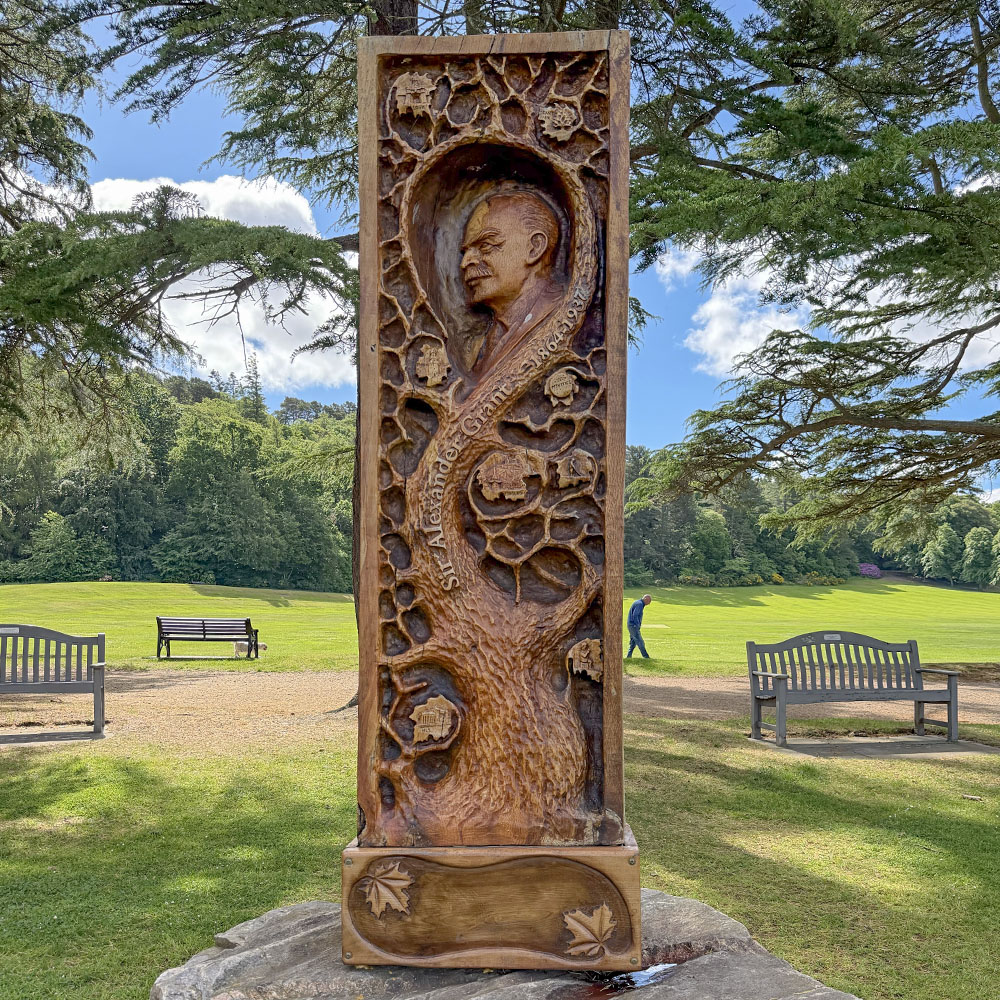
In the park you will find a carved wooden likeness of Grant in the garden, framed by branches whose leaves make a subtle nod to his life; a fine, unassuming way to honour someone given to anonymous charity.
What you find here today
Forres has never been shy of making use of the park as an amphitheatre. The wide, level expanse is ideal for an afternoon stroll but also for putting on an event. On the first weekend of July the Forres Highland Games take over, as they have for nigh on a hundred years.
From 2013 to 2018 the European Pipe Band Championships were held here, filling the park with the sound of more than 100 pipe bands and visited by some 15,000 spectators from around the world, annually.
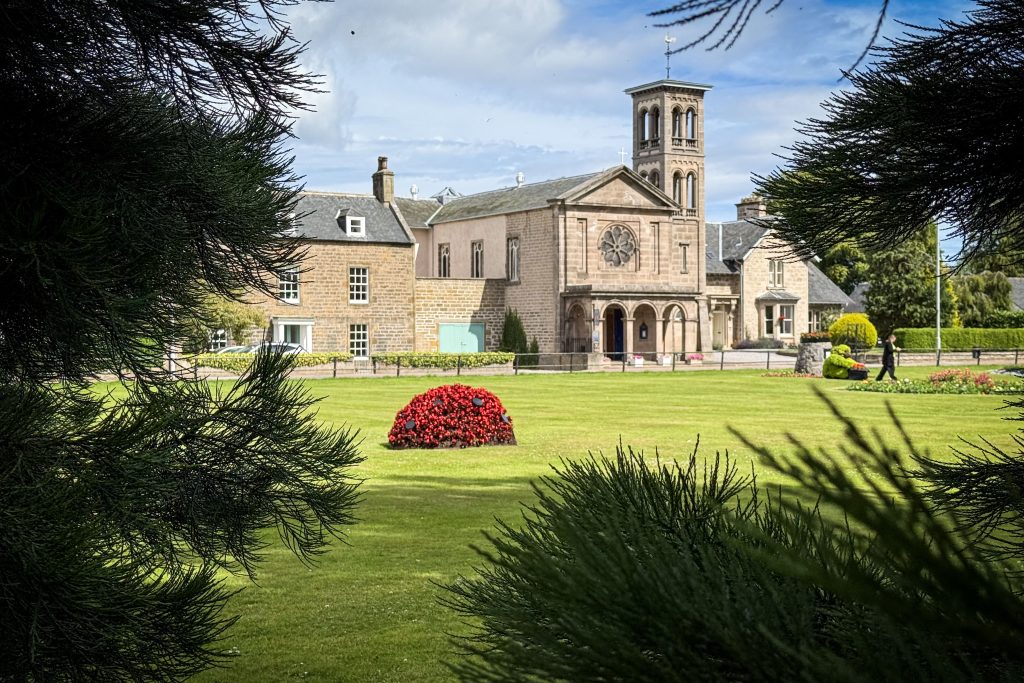

It serves its purpose as the town’s green space all year round. The cricket pitch is well used in summer, the open grounds host community affairs, sporting events, community picnics, markets, and in autumn the Rotary Club puts on a fireworks display that draws thousands.
As well as the wooden statue dedicated to Grant, there’s also Ben a piper that mark the pipe band championships it hosted, and piping in general. To complete the trio of wooden carvings, there’s also a unicorn, Scotland’s official national animal, marking the Queen’s Golden Jubilee
Why it is the heart of the town
A century later, it remains what Alexander Grant set out to make it, a kind of front garden for everyone to come and go as they please. Not every town can say it has a biscuit millionaire in its past. Forres has, and he provided a place for us to congregate, year in and year out. Go and have a sit on a bench in the floral garden and you are in the midst of the finest thank-you note the town has ever been given.