
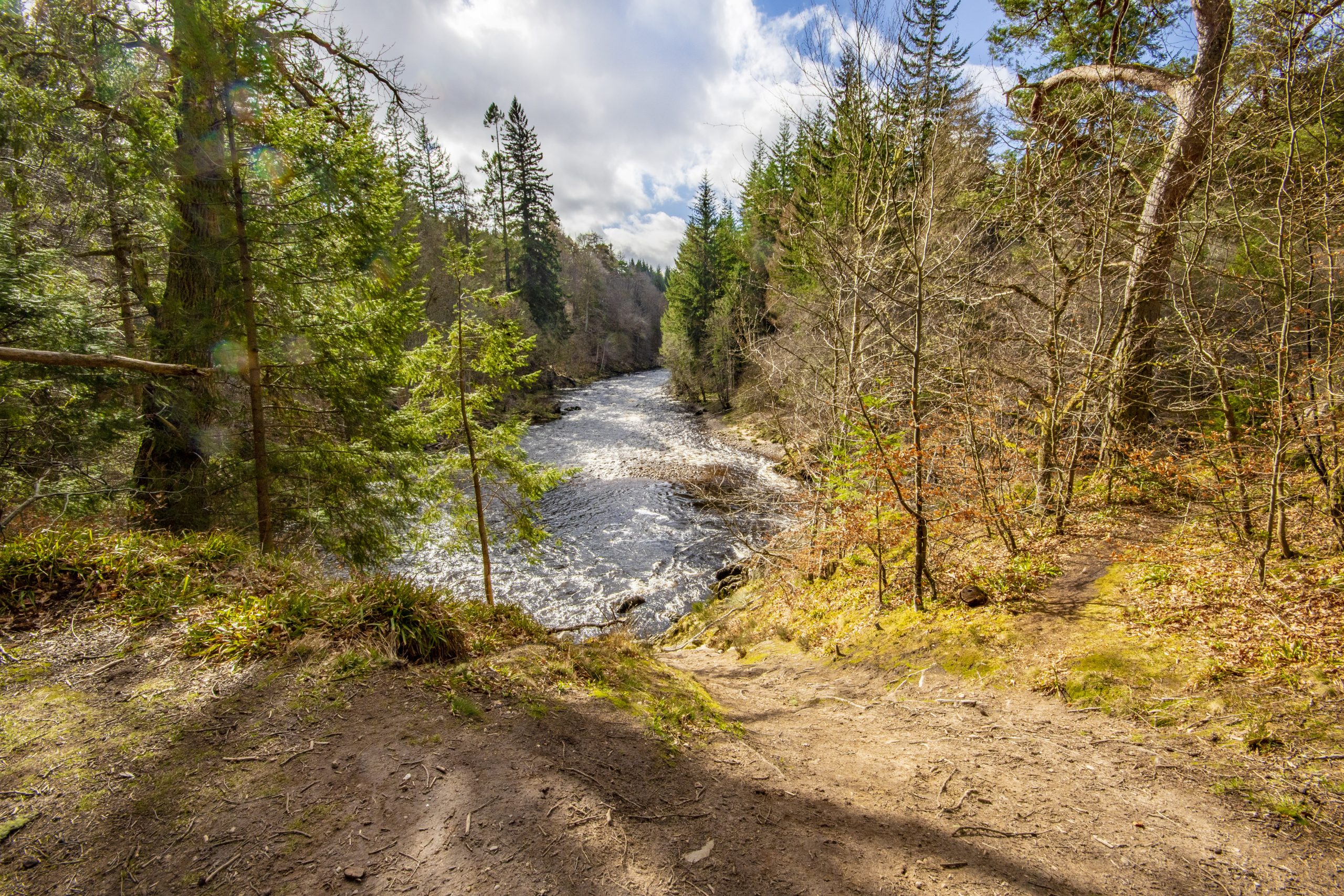
The story behind Randolph’s Leap is a misnomer. As you’ll discover, in the story of a chase between two fighting families, the jumper was Alexander Cumming, and Randolph likely stayed on the bank, and watched his target escape into the woods.
The story is one of the most famous in the area, and the history here is as good as any Highland yarn: feuds, a King’s whim and a matter of life or death over churning water.
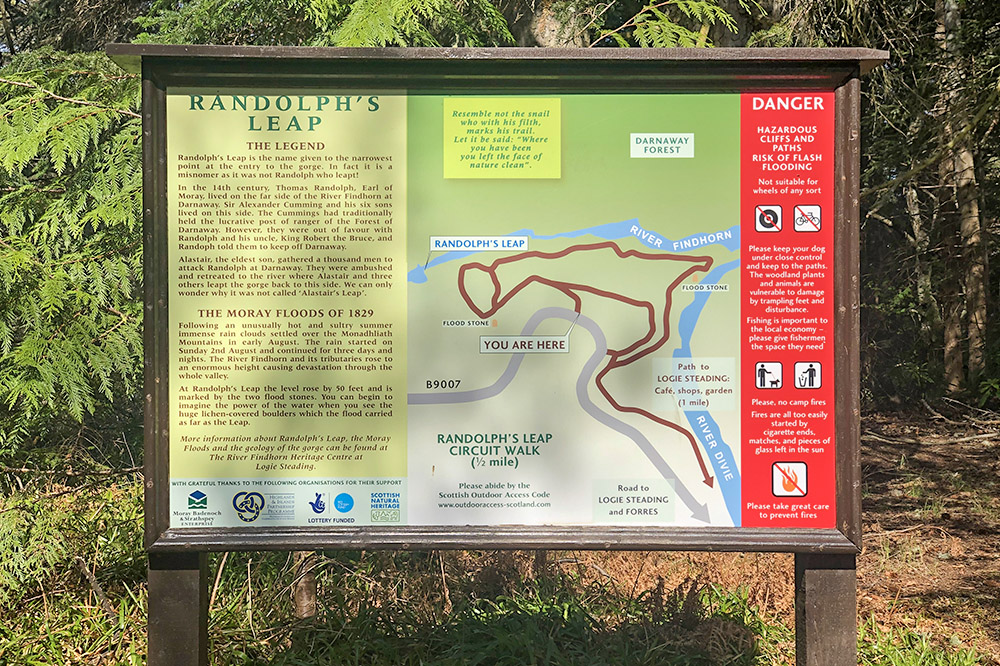
Back in the 14th century, Thomas Randolph, Earl of Moray and Robert the Bruce’s nephew, in possession of the land on one side of the River Findhorn. Opposite him were Sir Alexander Cumming (Comyn) and his six sons, rangers of Darnaway Forest and holders of the other side, until they lost the good graces of both the King and Randolph and were rather bluntly ordered off Darnaway property.
Walking the Findhorn valley
The walk is starts with a fifteen-minute drive up the Findhorn valley, past Relugas and into the woods at Logie.
Ask any local and they will say that a trip to Forres isn’t if you haven’t set aside time for Randolph’s Leap, or any of the walks along the riverside here.. So let this be your nudge to get out there.
Now, when you do the walk, you’ll need to make your own mind up whether anyone could have jumped the chasm that is now called Randolph’s Leap. Maybe some of the rocks have fallen away, maybe Cumming was buzzing with adrenaline. Maybe he fell in the water and scrambled up – a lot of facts can get blurred in 700 years!
Anyway, back to the story – Alastair, the eldest of the Cumming sons, put together a party to ambush Randolph’s men, but the affair did not go to plan. With Alastair and three others put to flight and backed right up to the river, they had little option but to make a run for it.
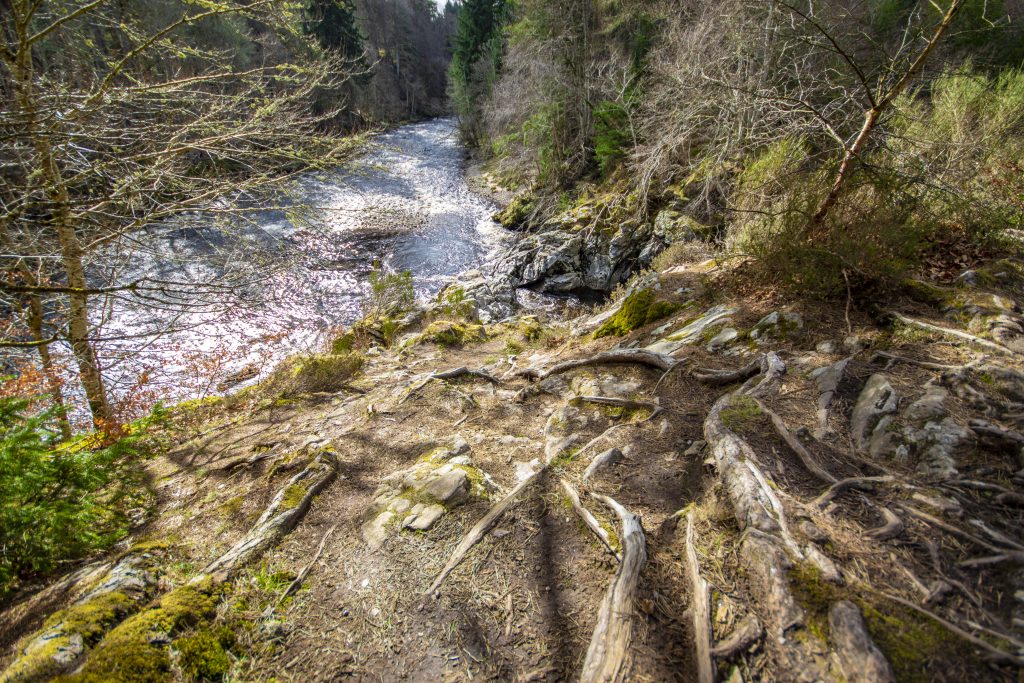
They put in a jump across the gorge at its narrowest point, where the rock walls close in and the Findhorn is all noise and fury below. And they survived.
Cumming’s Leap?
By rights the place should be known as Cumming’s Leap. But the King made a habit of granting the land to Randolph in the end, and through the years the name has been quietly adjusted to suit the victor. Randolph never put an inch of himself in the air.
In fact, it is believed the site was originally called Alexander’s or Alistair’s Leap, but because the land was later granted to the Randolphs, the title shifted to Randolph’s Leap.
From Logie Steading, the path follows the river; it is well-trodden and, for the most part, level, winding its way through mixed woodland and tall Scots pine, with the Findhorn running hard beside you. It is an easy to moderate affair.
Mind the edge though. There are some steep drops down to the water without much in the way of protection, so it is not a place to let a dog or small child wander free. The river is fast and powerful .
Site of Special Scientific Interest
Being a Site of Special Scientific Interest, this stretch has that to show for it: the pines are home to red squirrels and woodpeckers in no short supply, as well as a thriving number of river birds.
Head a bit further downstream beyond the gorge’s narrowest point and you will come to where the River Divie meets the Findhorn. It is a ten-minute detour but one well worth making for something more dramatic than the ‘leap’.
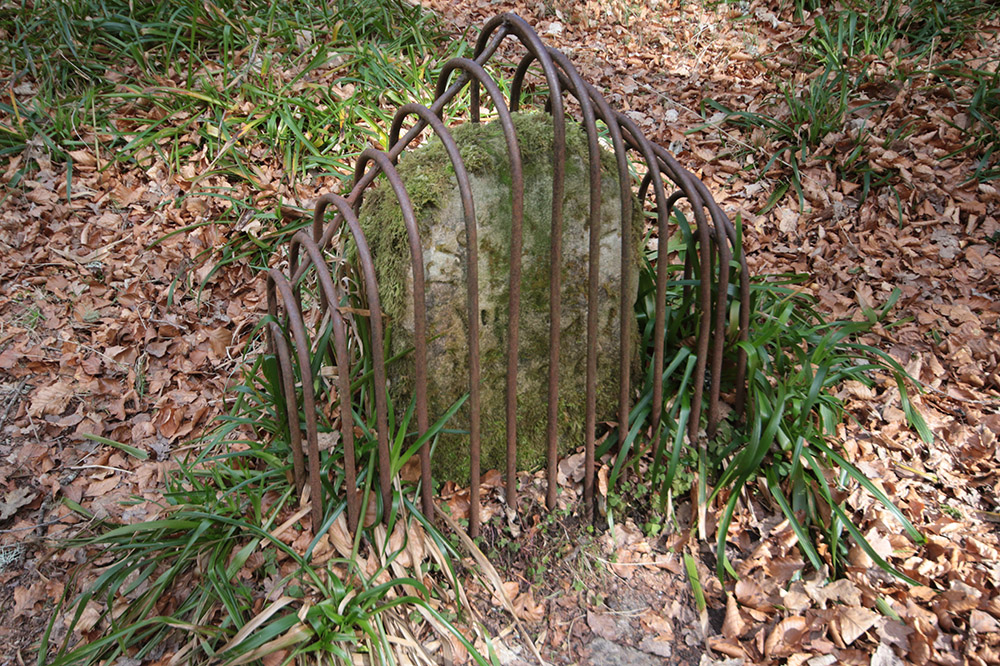
Look out for the stone flood markers on the path, unassuming enough to be overlooked. They are put there to record the “Muckle Spate” of August 1829; three days of unrelenting rain put the Findhorn fifty feet higher than usual in some spots and did for the mills, bridges and farmhouses of the valley. Take a moment to stand by one and look up, it is a sobering reminder of what this deceptively pretty river can do.
Logie Steading
If you start your walk at the roadside car park, you’d believe you were walking deeper and deeper into the remote countryside, but not far from the trodden path you’ll find Logie Steading.
Logie was a model farm in the 1920s and home to dairy herd right up to the 70s and 80s.


In the 1990s, the conversion to a retail outpost began. Now it is a collection of sandstone buildings with a fine assortment of independent concerns – from a secondhand bookshop and gallery to a garden centre with plants of their own making.
The café is the centrepiece. On a good day the courtyard is the spot to be with your coffee while others make their way back from the river. There is also a playpark and Logie House Garden, and if you are lucky you might catch some live acoustic music on a Sunday or a craft workshop. You can easily go in for twenty minutes and ends up spending the afternoon there.
A Forres must-do
It is an outing that requires nothing of you and offers plenty in return. There is no charge to walk the gorge or to park at the Steading, and no need to book. Just put on your shoes and take in the Highland scenery. The history enthusiast can ponder the feuding clans, the walker can have his river views without the hard climbing, and anyone after a leisurely few hours will find one of Moray’s finest cafés at the end of it. At fifteen minutes from Forres it is well worth the trip.