
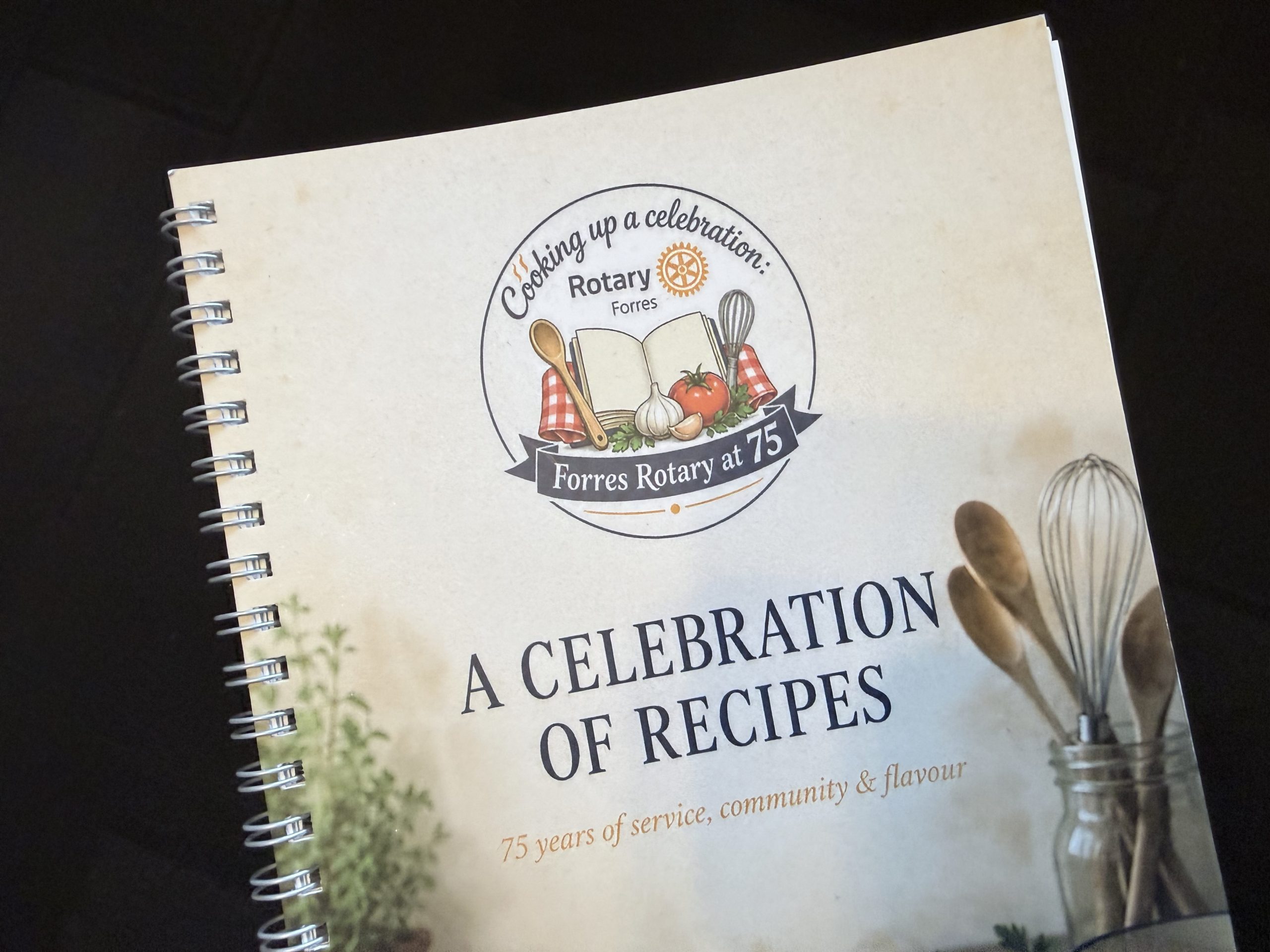
The Rotary Club of Forres and Local Favourite Recipes: A Community Cookbook to be Celebrated
There is a place on a every kitchen shelf for community cookbooks. They are not merely collections of instructions and ingredients but rather a portrait of the domestic life, traditions and tastes that define a town.
To celebrate its 75th anniversary, The Rotary Club of Forres has put together precisely such a document by calling on locals, children included, to share their best recipes. The result is a culinary snapshot of the community’s identity, one with the imprint of many different hands and kitchens.
Inclusiveness is what gives a cookbook of this sort its appeal. By welcoming entries from both adults and the younger set, the collection does more than put food on the page; it recognises cooking for what it is, a cultural practice learned at home and handed down. You will find a child’s preferred biscuit recipe in company with a good family stew or a festive pudding. In so doing the book becomes a democratic archive of taste, saying as much about how people belong as what they put on their plates.
It opens with a refreshing summer cucumber soup from Marion and Jim, and finsiesh with a satisfying Smarties Cookie recipe from Anderson’s Primary School. Between those tempting delicacies, there are some 75 other recipes, including mains with beef, pork, chicke, fish and vegetarian, sauces, bakes, soups and a section just from you youngsters.
Can I have some more please?
Forres, with its close-knit community life and distinct character, is well suited to an undertaking like this. The cookbook, at £7 will raise some funds, engender goodwill and put a sense of continuity on record. It might even trigger a second edition!
Then there is the charm of shopping locally for the ingredients. “Marie’s best ‘evah’ curry” encourages the reader to buy their meat from one of the three Forres butchers. It also tells us that this recipe was found, handwritten, into a personal recipe collection, and at the the danger of being lost forever, is now , preverved forever.”
Where a professionally written volume might be polished, a community compilation tends to have an intimacy about it, preserving the kind of personal and anecdotal details that make a dish memorable. There may be a word about why a particular item is a household staple or who first put it together. The contributions from children often bring a lighter touch, perhaps a no-bake treat or a cake with a whimsical name, adding to the authenticity of the whole.
It is also telling of the Rotary Club’s social role. Long known for service and philanthropy, the club has stayed true to form here. Instead of depending entirely on formal fundraising, they have put out a book that can make its way into homes and strengthen local bonds, possibly saving from obscurity some recipes that would have otherwise been private matters.
These days one might view a community cookbook as something of a quaint thing in our digital world, but its worth is undiminished because it is founded on human connection. Food is memory and hospitality as well as nourishment.